

Trade Support & Procurement Services
in Europe
Strategic Sourcing, Supplier Verification & End-to-End Trade Execution. From supplier identification to final delivery, bluegate manages your procurement and international trade operations with precision.
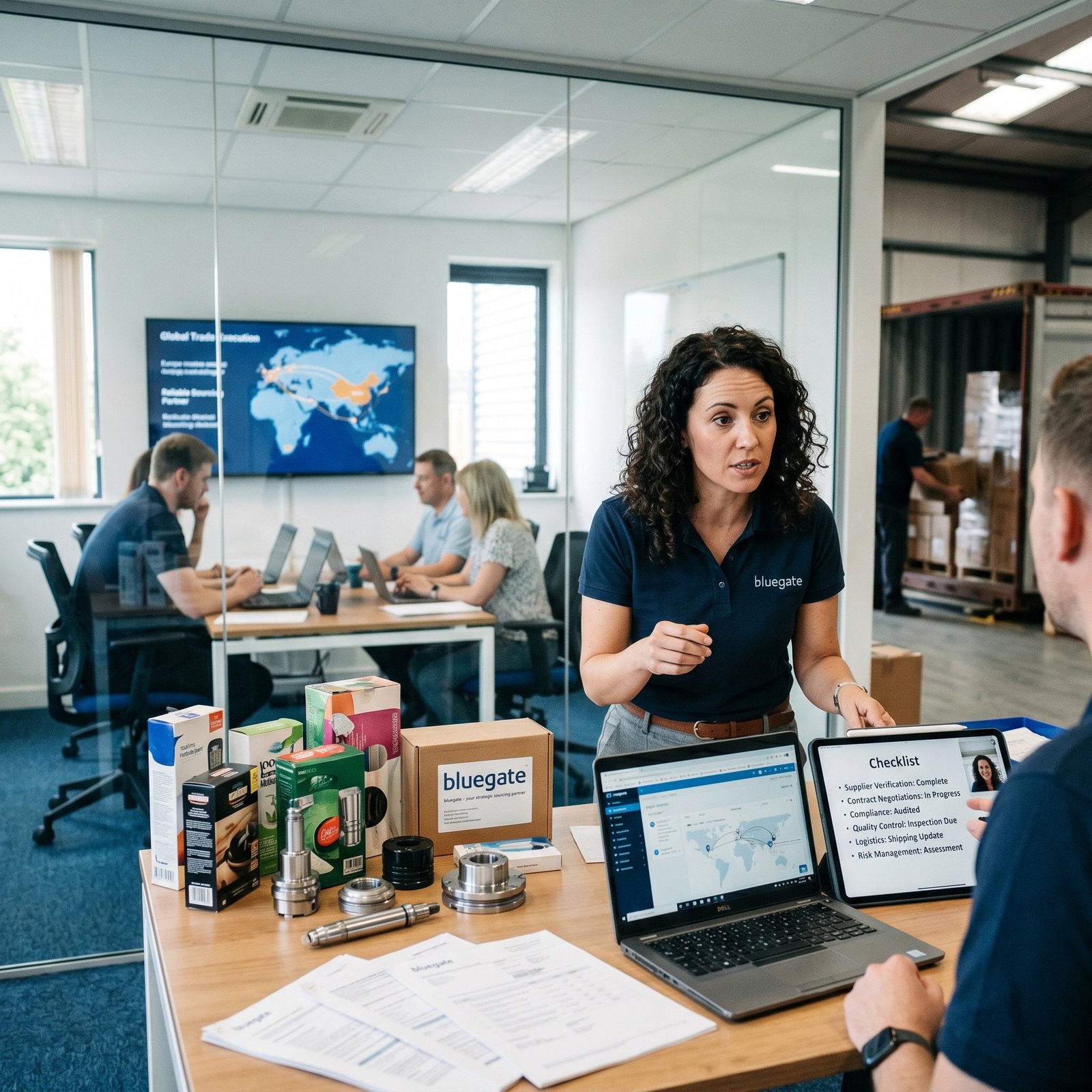
Sourcing products internationally is no longer just about finding a supplier. Companies must manage supplier verification, contract negotiations, compliance, quality control, logistics coordination and risk management across borders. Without proper procurement strategy and structured supplier management, businesses face delays, quality issues, hidden costs and regulatory exposure.
bluegate provides end-to-end trade support and procurement services for companies sourcing from Europe and beyond. We act as your strategic sourcing partner, managing supplier sourcing, due diligence, negotiations and trade execution to ensure cost efficiency, compliance and supply chain reliability.
What This Service Includes

Strategic Sourcing & Supplier Identification
We support companies with supplier sourcing across Europe and international markets. This includes market research, supplier identification, supplier evaluation and benchmarking. Instead of relying on unverified contacts, we apply a strategic sourcing methodology that focuses on quality, compliance, capacity and commercial viability. Our sourcing process reduces risk and ensures you work with vetted suppliers aligned with your commercial and operational objectives.
Supplier Verification & Due Diligence
Selecting a supplier without verification is one of the most common trade risks. We conduct supplier verification, document checks, background screening and, where required, coordinate factory audits and quality inspections. This includes reviewing company registration, compliance status, certifications, production capability and export readiness. Our supplier audit and due diligence support protects you from fraud, non-compliance and operational disruption.
RFQ Management & Contract Negotiation
Effective procurement requires structured tender management and negotiation. We manage the full RFQ process, comparing commercial offers, technical specifications, Incoterms and payment conditions. We support supplier negotiations to secure competitive pricing, favorable payment terms and risk-balanced contract conditions. Our goal is not just cost reduction, but sustainable procurement optimization that protects long-term supply stability.
Procurement Consulting & Cost Optimization
For companies looking to improve internal procurement processes, bluegate offers procurement consulting and advisory services. This includes spend analysis, category strategy development, supplier consolidation and cost-saving initiatives. We help design practical procurement strategies tailored to SMEs and trading companies that do not have large in-house procurement departments but require professional sourcing structures.
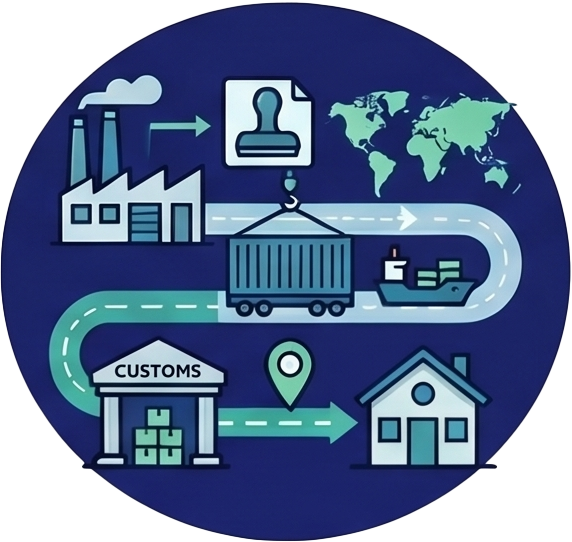
End-to-End Trade Execution & Import/Export Management
Procurement does not stop at signing a contract. We coordinate the operational side of trade, including export documentation, customs compliance, freight coordination, and delivery tracking. Our trade support integrates procurement, international shipping and compliance management into one streamlined process. This reduces communication gaps and ensures smooth execution from source to destination.

Who This Service Is For
- Need reliable supplier sourcing in Europe
- Require structured procurement outsourcing
- Want to reduce supplier risk
- Lack in-house procurement expertise
- Require end-to-end trade management
- Are expanding into new international markets
We also support freight forwarders and trading companies that require sourcing and procurement assistance for their clients.
Why Use bluegate
Hands-On Approach with Operational Depth
Integrated Trade & Logistics Expertise
European Network
Risk-Focused Procurement
Flexible & Scalable Support
FAQ
How do I identify and select the right suppliers (domestic vs overseas) for my needs?
Start with a clear supplier search: define specs, required certifications, target pricing, MOQ, and lead time. Then shortlist candidates using trade fairs, industry associations, trusted directories, and referrals. After that, verify the basics before you waste time: legal registration, trading history, ownership, and whether they actually export. We typically recommend samples or a pilot order before any serious commitment. When choosing domestic vs overseas, don’t just chase unit price. Local suppliers usually win on speed and lower operational risk, while overseas suppliers can be cheaper but require stronger quality control, more buffer time, and tighter contracts. The “right” supplier is the one that fits your cost, reliability, compliance, and delivery timeline, not the one with the prettiest PDF quotation.
What steps are involved in a strategic sourcing methodology?
A practical sourcing method has a simple flow: define the requirement, map the supplier market, create a shortlist, run an RFQ, compare offers on total cost, verify the supplier, negotiate terms, contract, then execute and monitor. The biggest mistake is skipping steps because “the supplier looks fine.” At bluegate we treat sourcing as an operational process, not a one-time purchase, so we document requirements, keep the RFQ comparable, and make the supplier verification and contract terms part of the decision, not an afterthought.
How do I conduct a spend analysis to find savings opportunities?
Pull your purchasing data and group it by category, supplier, and country. Identify your top spend categories and the suppliers taking the biggest share. Then calculate your true landed cost, not just the invoice price: freight, duties, insurance, handling, banking fees, and quality failures. Savings usually come from a few places: consolidating volumes, removing “maverick” purchases, standardizing specs, renegotiating payment terms, or switching Incoterms to reduce hidden logistics cost. Once you know where the money really goes, you can target the high-impact categories first instead of wasting time negotiating small items.
How do I structure an RFQ or tender to get competitive bids from suppliers?
Make the RFQ easy to compare. Provide exact specs, drawings if relevant, packaging requirements, required certifications, target quantities, delivery schedule, and quality expectations. State Incoterms, destination, payment terms, and what documents must be provided. Use one standard response format so suppliers don’t hide behind vague answers. Set a deadline, define evaluation criteria upfront, and make it clear you are comparing multiple offers. A tight RFQ creates “competitive tension” and gives you clean data to negotiate.
What negotiation strategies can help reduce procurement costs?
Negotiate with numbers, not opinions. Use consolidated volumes, competitor quotes, and a clear cost breakdown. Push for better payment terms, better MOQs, shorter lead times, and lower warranty/claim friction, not just a lower unit price. Also negotiate the commercial structure: longer-term agreements for better pricing, price-review clauses, and penalties for non-performance. The cheapest quote is often the most expensive once delays, rejects, and rework show up. We focus on total cost and supply reliability, then negotiate price within that reality.
How do Incoterms fit into procurement strategy planning?
Incoterms define who pays for transport, who handles export formalities, and where risk transfers. That directly impacts your landed cost and your operational control. If you have strong logistics support, buying on FCA/FOB can reduce hidden markups and give you control. If you don’t, terms like CIF/CIP or DAP can reduce operational load, but you need to watch for inflated freight costs and unclear responsibilities. The key is consistency: every RFQ and contract must state the Incoterm and the named place, otherwise you can’t compare offers properly.
How do I verify a supplier’s legitimacy and credentials before contracting?
Verify the company exists, is registered, and is allowed to trade. Confirm the legal entity name, address, VAT/EORI where relevant, and bank details independently. Then verify capability: do they have the facility, equipment, and process they claim, and can they produce at your required quality and volume. For higher-risk suppliers or high-value orders, use third-party verification or an on-site audit. At bluegate, we treat verification as a standard step before serious orders, because fixing a bad supplier decision costs far more than checking properly upfront.
What’s the difference between single-sourcing and multi-sourcing for risk management?
Single sourcing simplifies operations and can improve pricing, but it creates a single point of failure. Multi-sourcing reduces risk and improves supply continuity, but it can increase management complexity and sometimes cost. In real life, many companies use a hybrid: one primary supplier plus one backup supplier for critical items. If you must single-source, you protect yourself with stronger contracts, audits, safety stock, and continuous monitoring.
How can I incorporate ESG and sustainability criteria in supplier evaluation?
Treat ESG like any other evaluation criterion: measurable, documented, and scored. Add ESG requirements into your RFQ, request certifications or audit reports, and include sustainability questions in supplier onboarding. Then track ESG-related KPIs during performance reviews. If it matters to your business, it must be contractual and monitored, otherwise it’s just marketing.
What documents are needed for importing or exporting goods?
For EU-to-EU trade, you usually need commercial documents like invoice, packing list, and transport documents. For exports outside the EU, you also need an export declaration and often additional documents depending on the goods and destination. For imports into the EU from non-EU countries, you need an import declaration, correct HS codes, origin information, and sometimes licenses or certificates. The exact list depends on the product and route. At bluegate, we confirm required documents before shipment so you don’t find out at customs when it’s too late.
What are the most common Incoterms and how do they allocate cost and risk?
Common Incoterms include EXW, FCA, FOB, CIF and DAP. They define who pays which leg of transport, who arranges it, and where risk transfers. EXW gives the buyer most responsibility, FOB is common for ocean freight where risk transfers on board the vessel, CIF includes freight and insurance to the port, DAP delivers to a named place, and DDP includes duties and taxes handled by the seller. The right Incoterm depends on who has logistics capability and who should control risk.
What payment terms should I use, and what are their risks?
L/C is safer when trust is low or deal size is high, but it adds bank costs and paperwork. Open account is cheaper and easier but exposes the seller, so suppliers only offer it to trusted buyers. Documentary collections sit in the middle. For new suppliers, you typically use a safer structure: partial advance plus balance against documents, or an L/C. Match payment terms to supplier risk, order value, and how easily you can enforce a dispute.
What is the role of a freight forwarder and customs broker in international shipments?
The forwarder coordinates transport end-to-end and ensures the shipment moves on time with correct transport documentation. The customs broker handles customs declarations and compliance. Sometimes the forwarder can act as the broker depending on licensing and setup. Using the right partner reduces delays, prevents paperwork errors, and keeps your team focused on buying and selling instead of chasing documents.
What is an EORI number and who needs one for cross-border trade?
An EORI number is required for companies filing customs declarations in the EU. If you import or export outside the EU, you need one. Even if your broker files on your behalf, they will still request your EORI. Without it, customs clearance cannot be completed.
What is Procurement as a Service and how does it differ from traditional consulting?
Traditional consulting gives advice and a plan. Procurement as a Service runs the process for you. That can include supplier sourcing, RFQs, ordering workflows, contract support, and performance monitoring. It’s essentially outsourcing part or all of your procurement function, usually with defined service levels and ongoing support rather than a one-off project.
How are procurement consulting or outsourcing services typically priced?
Typical models are fixed-fee projects, daily rates, monthly retainers, or performance-based fees linked to savings. Outsourcing models can also include subscription pricing or hybrid models. The important part is scope clarity: what’s included, what isn’t, and how savings are calculated if a success fee is involved. At bluegate, we keep pricing transparent and tied to a defined scope, because vague scopes are where budgets die.
What’s the difference between project-based, retainer, and success-fee models?
Project-based is a defined assignment for a fixed price. Retainer is ongoing monthly support and access. Success-fee links payment to measurable outcomes like verified savings. Success-fee aligns incentives but must have a clear baseline and rules, otherwise it becomes an argument instead of a contract.
How should I structure a supplier contract to manage risk?
Contracts must clearly define specs, quality acceptance criteria, delivery terms, Incoterms, payment terms, and remedies for late delivery or defects. Include warranty terms, dispute resolution, governing law, and termination rights. If compliance matters, include documentation obligations and liability for non-compliance. A clear contract is your risk control tool, not a formality.
What are important considerations when negotiating contract terms?
Beyond price, focus on lead times, quality remedies, warranty, payment schedule, Incoterms, and dispute resolution. Define who pays for what and what happens when something goes wrong. Also negotiate flexibility: volume changes, spec changes, and how pricing adjusts. Document every agreed change. “Verbal agreement” is not a strategy.
What are common mistakes businesses make in international sourcing?
Skipping supplier verification, using weak contracts, misunderstanding Incoterms, and underestimating logistics and compliance costs. Another common mistake is selecting based on unit price only, then paying later through delays, rejects, and duties that were never calculated. A professional sourcing process prevents most of these problems.
What hidden risks should I watch for in global procurement?
Hidden risks include wrong HS codes, missing certificates, underestimated duties and VAT, banking fees, currency swings, and destination restrictions. Also watch for route-related issues: transit requirements, special territories, and paperwork dependencies that can block shipments. If you don’t map these upfront, they show up as expensive surprises.
How do I manage currency and payment risk in cross-border trade?
For currency risk, agree currency upfront and hedge large exposures when needed. For payment risk, choose terms that match supplier trust level: L/C for higher risk, open account for established relationships, and hybrid structures for middle cases. Always verify bank details independently to prevent fraud, and don’t ignore the cost of payment mechanisms in your total cost calculation.
What should I do if a supplier fails to deliver or goes out of business?
Start with your contract remedies, then shift volume to backup suppliers if you have them. If you don’t, you learn the hard lesson: you should have. Document everything for claims, communicate early to stakeholders, and rebuild your sourcing with stronger due diligence and risk planning. For critical items, maintain backups and safety stock.