

LCL Ocean Freight
Less than Container Load
Cost-effective LCL shipping from Europe to the Middle East and Africa, coordinated end-to-end by bluegate in Rotterdam.
What is LCL / Groupage Shipping
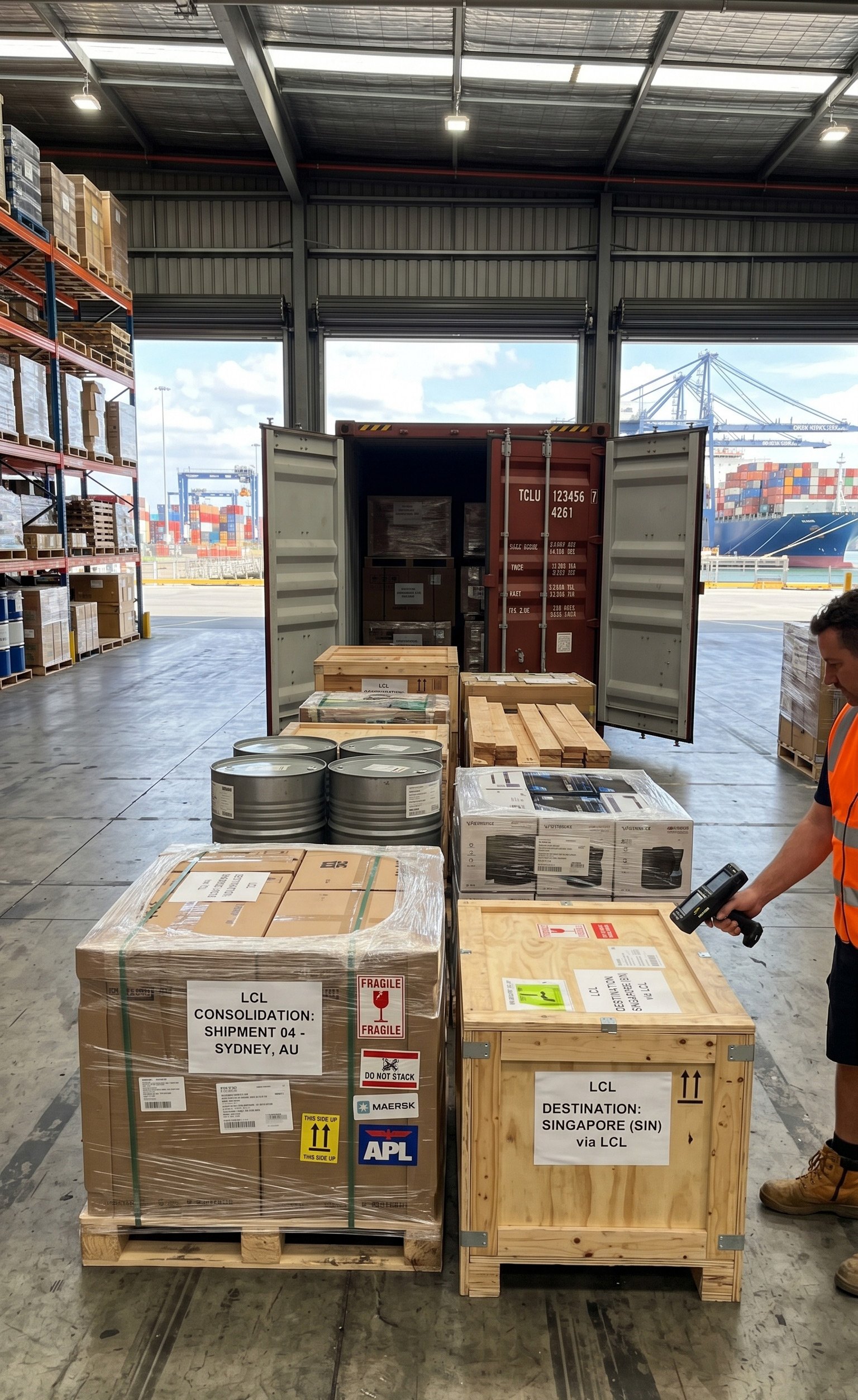
LCL is used when your cargo is too small to justify a full container but still needs reliable sea freight. Instead of waiting to fill an entire box, your shipment moves as part of a shared container (groupage transport) with other cargo going to the same region. bluegate manages the moving parts so your shipment stays predictable, even when it’s not container-sized.
LCL (Less than Container Load) is cargo consolidation: your goods are packed with other shippers’ goods into one container, then separated again at destination. It’s a practical option for smaller export shipments—especially when you ship regularly but not in full-container volumes.
Start-to-Finish Management
- Pickup planning in Europe (aligned with your Incoterms—EXW, FCA, FOB, and others)
- Cargo consolidation through the correct routing and cut-off schedule (so your shipment doesn’t sit waiting)
- Sea freight booking and coordination of shipment milestones (ETD/ETA, departure, arrival)
- Export documentation support (Commercial Invoice, Packing List, Certificates if required, and shipment instructions)
- Status updates your way: we keep you posted through your preferred method—typically email and WhatsApp
- Tracking after departure: once the container sails, we share the tracking link so you can follow movement without chasing
LCL is not “set and forget.” It has more handoffs than FCL, and that’s exactly why shippers use a forwarder: to keep consolidation, paperwork, and timing under control.
Who should use LCL Shipping?

Have one to a few pallets / cartons to ship internationally

Ship regularly and your volume varies month to month

Cannot wait to fill up a full container and air freight is too expensive
If your shipment is approaching full-container volume, or if the cargo is high value, fragile, or time-critical, we’ll tell you honestly whether FCL is the better option.
Why choose LCL with us
Pay for the space you use
Ship more often, keep inventory lean
Fewer surprises with documentation and handoffs
One accountable export contact
FAQ
What is LCL shipping (groupage) in simple terms?
It’s shared container shipping. Your cargo is combined with other shipments in one container for the ocean leg, then separated again at destination.
When should I use LCL vs FCL?
Use LCL when you don’t have enough cargo to fill a container and you want a cost-effective sea freight option. Use FCL when you need your own container (higher volume, fewer touchpoints, or more control).
How are LCL shipping rates calculated?
LCL is priced by chargeable volume (often CBM) and sometimes weight, plus origin/destination handling charges tied to consolidation and unpacking. We’ll explain the breakdown clearly before you confirm.
Do you offer door-to-port export from Europe?
Yes. We focus on door-to-port: pickup from your address in Europe (where truck access is possible), then export coordination through to the destination port.
What export documentation is required for LCL sea freight?
At minimum: Commercial Invoice and Packing List. Depending on cargo and destination, you may also need certificates, permits, or specific statements. We’ll advise on what’s needed for your shipment.
How long does LCL take compared to FCL?
LCL can take longer because it depends on consolidation cut-offs and additional handling steps. We’ll give you a realistic timeline based on routing, readiness date, and the next consolidation window.
What details do you need to quote?
- Pickup address in Europe (and ready date)
- Destination port
- Cargo description + packaging (cartons/pallets/crates)
- Weight and dimensions (or CBM)
- Incoterm (EXW, FCA, FOB, etc.)
- Any special requirements (batteries, DG/IMO, temperature control, controlled goods)
How will I get shipment updates and tracking?
We keep you posted at each step via email or WhatsApp (your preference). After departure, we share the container tracking link.
How is LCL chargeable weight calculated?
LCL shipments are charged based on W/M, which means weight or measure, whichever is higher. One cubic meter equals one metric ton for billing purposes. To calculate volume, the dimensions of each package are multiplied in meters to obtain cubic meters. For example, a pallet measuring one point two by one by one meters equals one point two cubic meters. If that pallet weighs four hundred kilograms, the shipment is billed as one point two cubic meters because volume is higher than weight. If the same pallet weighed one thousand five hundred kilograms, it would be billed as one point five W/M because weight becomes the higher value.
Why do forwarders talk about W/M instead of kilograms?
Ocean LCL space is limited by both weight and volume. Light but bulky cargo occupies space, while dense cargo consumes payload capacity. Using W/M ensures the cost reflects whichever resource the cargo uses most.
What additional charges are included in LCL pricing?
LCL shipments include more cost components than FCL because cargo passes through consolidation warehouses. Typical charges include origin handling, consolidation fees, export documentation, ocean freight, destination handling, deconsolidation, delivery order fees, and port charges. Local customs clearance and final delivery are usually quoted separately unless door delivery is requested.
When does LCL become more expensive than FCL?
Once a shipment reaches roughly twelve to fifteen cubic meters, the cost per cubic meter often exceeds the cost of booking a full container. At that point FCL becomes both cheaper and operationally simpler.
What is the minimum shipment size for LCL?
We usually accept shipments starting from around one cubic meter or one thousand kilograms. Smaller shipments are technically possible but often uneconomical due to fixed handling costs.
Is there a maximum size for LCL?
There is no strict limit, but shipments above fifteen cubic meters are usually better shipped as FCL because handling costs and transit times increase significantly.
Can pallets be shipped as LCL cargo?
Yes, pallets are the most common LCL shipment type. Palletized cargo reduces handling risk and simplifies warehouse operations during consolidation and deconsolidation.
Why does LCL shipping take longer than FCL?
LCL cargo must first arrive at a consolidation warehouse, wait for other shipments going to the same destination, and then be loaded into a shared container. At destination the container must be unloaded and each shipment separated before customs clearance and delivery. This consolidation and deconsolidation process typically adds several days to the transit time.
How often do LCL containers depart?
Most major trade lanes have weekly LCL consolidation departures. Less common routes may have departures every two weeks depending on cargo volume.
Is LCL cargo more likely to be damaged?
LCL cargo is handled multiple times during consolidation and deconsolidation, which increases the importance of strong packaging. Proper palletization, shrink wrapping, and clear labeling significantly reduce risk.
How should LCL cargo be packed?
Cargo should be packed for multiple handling stages. Cargo must be forkliftable, Pallets should be stable and stackable, cartons should be strong and sealed, and fragile cargo should include internal protection and clear handling labels.