

Road Freight in Europe
Road freight services across Europe — FTL, LTL, groupage and heavy haulage, managed by bluegate.
Road freight in Europe sounds simple until it is not. Different weight limits per country, varying transit times, carrier capacity shortages, cabotage rules, toll systems, and documentation requirements quickly turn a basic shipment into an operational risk.
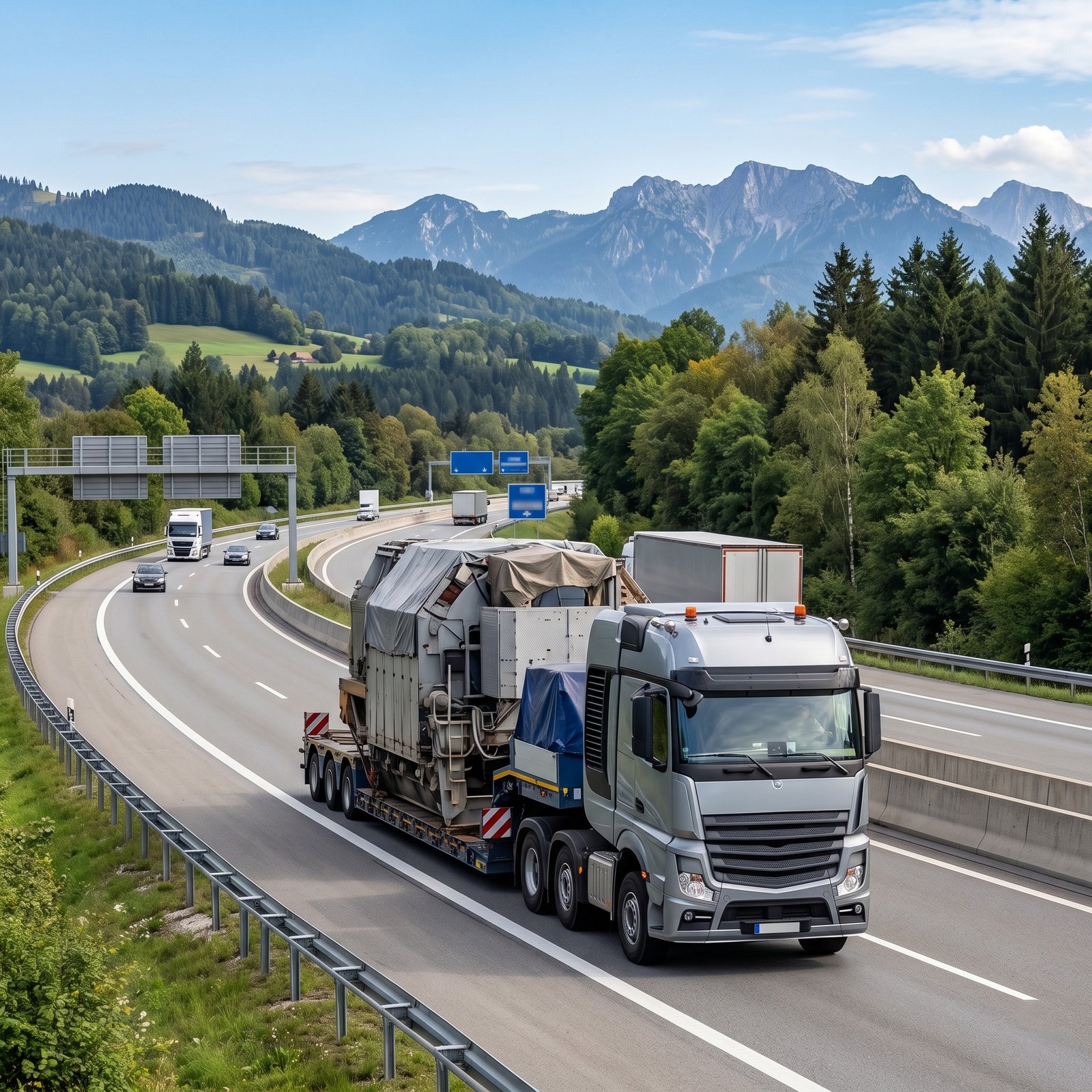
bluegate provides structured road freight services in Europe across Germany, Netherlands, Belgium, France, Italy, Spain or Eastern Europe, covering FTL transport, LTL shipping, pallet transport and heavy haulage.
What bluegate’s road freight service Includes
Full Truck Load (FTL)
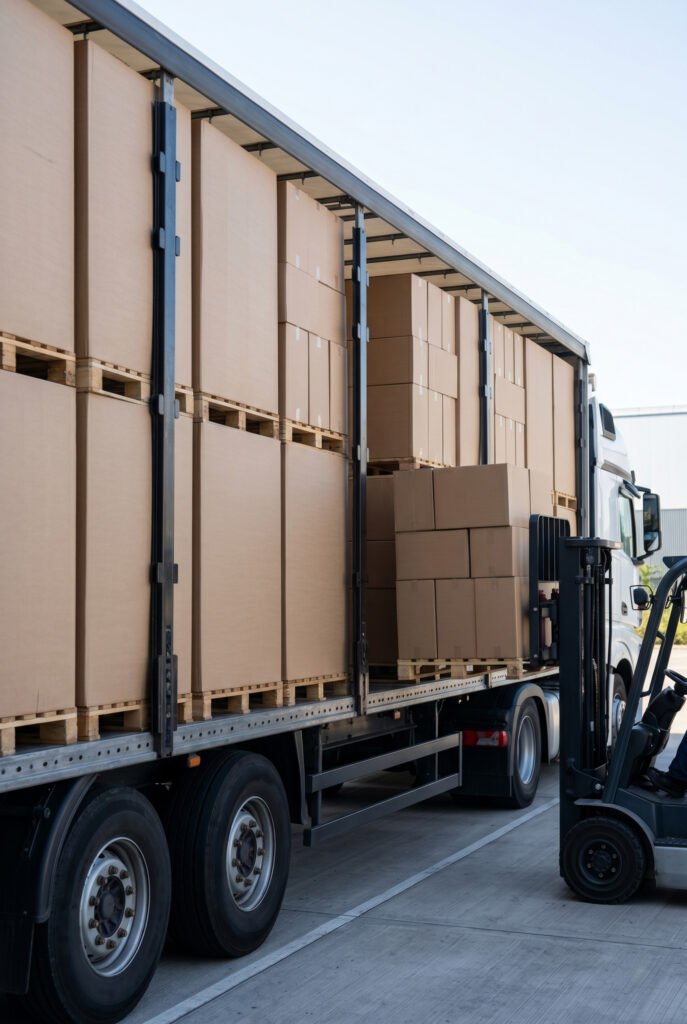
FTL transport is the right solution when cargo occupies most or all of a trailer, when direct routing is required, or when handling risk must be minimized. In a full truck load setup, your shipment moves from loading address to delivery address without consolidation stops.
Operationally, FTL reduces handling risk and improves transit predictability. Payload capacity for a standard 13.6m trailer is generally up to 24–25 tons, depending on axle configuration and country regulations.
FTL road transport is commonly used for industrial goods, FMCG distribution, high-value cargo, time-sensitive deliveries and cross-border shipments where transshipment is not acceptable.
We arrange standard tautliners, box trailers, mega trailers, refrigerated units and dedicated express trucks across Europe.
Less Than Truck Load (LTL) / Groupage
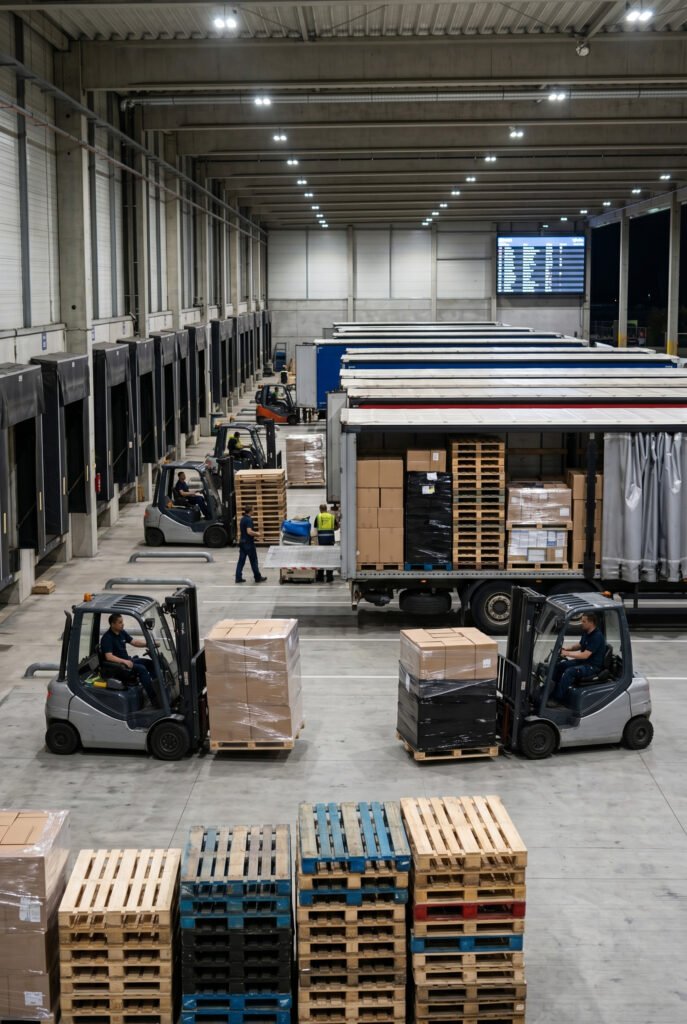
LTL shipping and groupage transport are designed for palletised cargo that does not justify a full truck. Instead of paying for unused capacity, shipments are consolidated within a European pallet network.
Operationally, LTL involves hub-based routing. Cargo is collected locally, consolidated at a terminal, and then linehauled toward destination hubs before final delivery. This structure lowers cost but slightly increases transit time compared to FTL.
Pricing for LTL transport is calculated based on chargeable weight, loading meters, pallet count, stackability and destination zone. Non-stackable pallets and oversized dimensions increase cost due to space inefficiency.
LTL pallet transport is ideal for distributors, wholesalers, spare parts suppliers, e-commerce operators and exporters moving regular shipments of one to fifteen pallets across Europe.
We manage transit time planning, proof of delivery, cross-border routing and coordination with local delivery partners.
Heavy Haulage & Special Machinery Transport
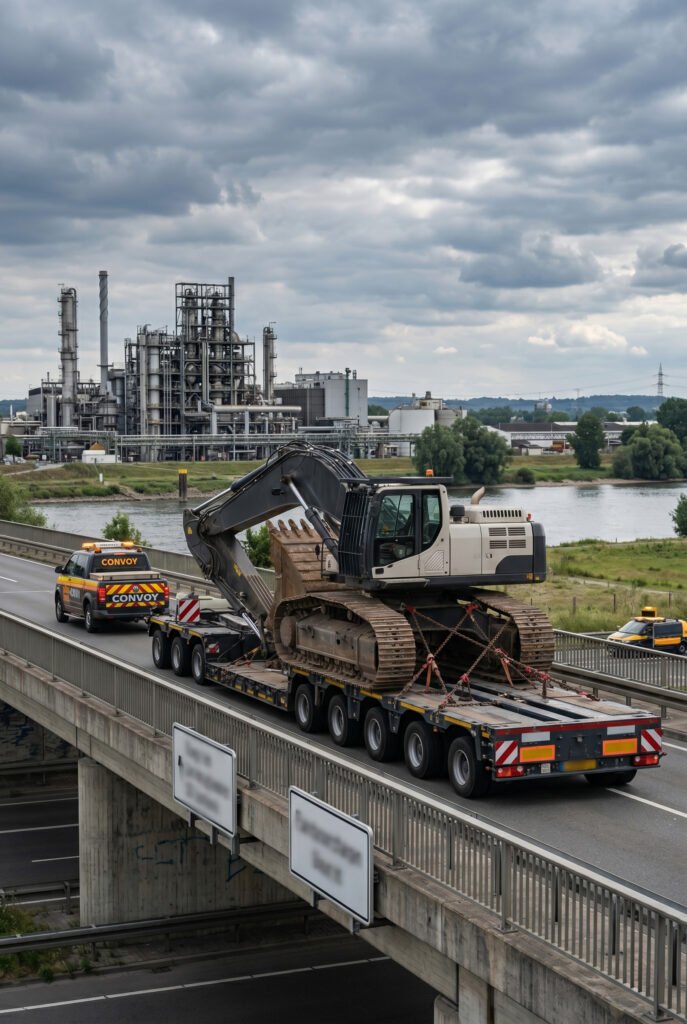
Transporting excavators, construction machinery or oversized industrial equipment requires more than standard road freight. It requires route analysis, permit management and technical supervision.
Heavy haulage and special transport projects are planned around axle loads, bridge limitations, tunnel clearances and country-specific abnormal load regulations. Equipment such as low-loader and low-bed trailers is selected based on weight distribution and dimensions.
Pricing drivers include escort requirements, permit costs, route deviations, loading supervision and potential waiting time at site. For cross-border heavy machinery transport within Europe, early planning is critical to secure permits and avoid operational delays.
bluegate coordinates heavy haulage for machinery exporters, project cargo clients and construction equipment suppliers moving oversized cargo across European corridors.
Who This Service Is For
Importers and exporters distributing goods across Europe.
Manufacturers shipping full truck loads between production and warehouse locations.
Distributors moving palletised cargo through LTL networks.
Freight forwarders requiring reliable European road capacity.
Traders managing cross-border cargo flows.
Project cargo clients and machinery exporters transporting heavy equipment
Why Use
bluegate’s Road Freight Service
1. Boutique service with European reach
2. Direct coordination with routing expertise
3. Transparent pricing and controlled execution
FAQ
When should I choose LTL over FTL shipments for European road transport?
Choose LTL when you have a few pallets or a smaller tonnage and paying for a full truck would be wasted capacity, especially if your delivery window is flexible. Choose FTL when you need speed, dedicated capacity, fewer handling touches, or special equipment or constraints. bluegate will advise based on your volume, timeline, and risk sensitivity.
How is LTL freight pricing calculated (by weight, volume, pallets, etc.)?
LTL is usually priced on chargeable weight and/or the space you occupy, commonly using pallets, cubic meters, or loading meters depending on the network. Carriers typically convert volume into a “volumetric weight” (for example using a factor like one cubic meter equals a certain number of kilos) and charge whichever is higher: actual gross weight or volumetric weight, then apply distance/zone tariffs plus surcharges like fuel and any extra services. bluegate quotes will clearly state the pricing basis so you know what you’re paying for.
What is groupage (consolidation) shipping and how does it differ from LTL?
In European road freight, groupage and LTL are effectively the same concept: your cargo rides in a shared vehicle with other shippers’ freight, consolidated through hubs and linehauls. Sometimes “groupage” is used more for forwarder-led consolidation at an origin warehouse, but operationally it’s the same shared-load model with itemized billing.
What is the booking process for a European road freight shipment with bluegate?
You send bluegate the shipment basics (addresses, dates, cargo description, weights/dimensions, packaging, and any site constraints like forklifts or tail-lift needs), then we select the right service and carrier, confirm capacity, and issue a booking confirmation with a pickup window. We coordinate instructions and paperwork (CMR and any customs docs if applicable) and then manage the pickup, tracking updates, and delivery coordination end-to-end.
What are the cut-off times for booking FTL and LTL shipments in Europe?
FTL usually needs at least two working days lead time to reliably secure the exact pickup date, while LTL often needs similar or slightly earlier notice because it has to fit into a consolidation plan. Express options can be faster but cost more and depend on real capacity. bluegate confirms the exact cut-offs per route and carrier when we quote and book.
How do LTL networks consolidate shipments at hubs, and does my cargo touch multiple terminals?
Most LTL moves are collected locally, brought to a hub for sorting, then linehauled to a destination hub and delivered locally, which means your freight can be handled multiple times. That’s how shared networks stay cheap and frequent, but it increases handling exposure compared to a direct FTL. bluegate mitigates risk by insisting on proper packaging, labeling, and realistic handling expectations.
How do I calculate loading metres for unusual or bulky cargo?
Loading meters represent how much linear floor length your cargo occupies across the usable trailer width, so you calculate it by mapping how it would sit on the trailer floor and measuring the length it consumes. For irregular freight, dimensions (L×W×H) and whether pieces can be placed side-by-side matters a lot, because a small change in how it sits can change the billed space. Send bluegate the piece dimensions and we’ll calculate the loading meters correctly and flag any abnormal-load implications.
How do seasonal or holiday driving bans (e.g. Sundays, Christmas) affect road deliveries?
Many countries restrict heavy truck driving on Sundays and public holidays (and sometimes Saturdays or specific holiday peaks), which can push departures or arrivals by a day even when everything else is perfect. These bans are regulatory, not “carrier problems,” so the practical move is planning around them with buffers and smart routing where possible. bluegate plans schedules with these restrictions in mind and warns you when a route is likely to be impacted.
What is a CMR consignment note, and who is responsible for preparing it?
The CMR is the standard road transport document for international carriage, acting as the contract of carriage and receipt and forming the backbone of claims and liability discussions. The shipper provides the shipment data, and the forwarder/carrier often prepares the document operationally, but the key is that it must be accurate and signed correctly at pickup and delivery. bluegate ensures a compliant CMR is issued and tells you what must be checked before anyone signs anything.
What is an e-CMR (electronic CMR) and where is it accepted?
An e-CMR is a digital version of the CMR under the relevant protocol, intended to replace paper while keeping legal validity when accepted by the route countries and all parties. Adoption is broad in parts of Europe but not universal for every cross-border combination, especially when you leave the “easy” corridors. bluegate can arrange e-CMR where feasible, and defaults to paper where acceptance is uncertain so your truck doesn’t get stuck because someone wants to be modern.
When do ADR (dangerous goods) regulations apply and what are the carrier’s requirements?
ADR applies whenever your goods are classified as dangerous for road transport, which triggers requirements for proper packaging, labeling, documentation (including UN number and proper shipping name), and ADR-certified drivers and equipment. If your shipment is ADR, you must declare it upfront because “surprise dangerous goods” is how you end up with rejected pickups and fines. bluegate books ADR-capable carriers and checks the documentation and routing constraints.
What special vehicles and permits are needed for transporting heavy machinery (e.g. excavators)?
Heavy machinery often needs low-loaders or specialized trailers (low-bed, extendable, multi-axle) and may require oversize/overweight permits if dimensions or weights exceed national limits. Planning includes lashing, route feasibility, and sometimes escorts, with lead times that can range from days to weeks depending on countries crossed and how abnormal the load is. bluegate coordinates the equipment, permits, routing, and compliance package once you provide final dimensions and weights.
What height, width and weight limits must heavy hauliers observe in Europe?
A practical baseline for “standard” road transport is around 2.55 m width, about 4.0 m height, and typical gross limits in the forty-to-forty-four tonne range depending on country and axle setup, with anything beyond that entering “exceptional transport” territory. Once you exceed standard limits, permits, routing checks, and often escorts become part of the job. bluegate treats anything near the limits with caution because near-limit loads are where small mistakes become expensive delays.
What are fuel surcharges and how are they calculated on road freight invoices?
Fuel surcharges are designed to absorb diesel price volatility and are often applied as a percentage on top of the base freight or as a per-km uplift, updated on a regular schedule. It’s basically a built-in “fuel moved, so the price moved” mechanism. bluegate applies the carrier’s current surcharge method and shows it clearly so you can reconcile invoices.
What are common accessorial charges (e.g. waiting time, forklift, re-delivery)?
Accessorials are extra charges for conditions or services beyond standard pickup and delivery, such as excessive waiting, failed delivery attempts, tail-lift requirement, difficult access, out-of-hours handling, or special equipment needs. They exist because time and equipment have costs, and carriers invoice those costs when operations deviate from the standard process. bluegate tries to prevent them by asking the annoying questions upfront and then listing likely extras in the quote.
What is the difference between carrier’s liability under CMR and cargo insurance?
CMR liability is the legal minimum compensation framework and is weight-based and limited, while cargo insurance covers the cargo value (typically invoice value plus an uplift) against broader risks, often far beyond what CMR would pay. If your goods are valuable, CMR is not “insurance,” it’s a limited liability regime, and it won’t make you whole. bluegate can arrange insurance or work with your insurer, depending on your preference.
What documentation does bluegate need from the shipper to start a road booking?
We need full pickup and delivery details, cargo description, packing type, piece count, weights and dimensions, any special handling needs (ADR, temperature control, tail-lift, time slots), and customs-related information if crossing to a non-EU destination. Without accurate data, carriers price defensively or refuse service, and nobody wins. Give bluegate clean details and we can quote and execute without drama.
Can I request a tail-lift truck, and what are the costs?
Yes, and you should request it upfront if there is no dock or forklift available, because retrofitting that requirement mid-delivery is how you get delays and extra charges. Tail-lift service typically adds a surcharge depending on the lane and carrier and may come with weight limits on the lift. bluegate includes the tail-lift requirement in the booking and shows the cost impact in the quote.
What happens if a road freight shipment is held up in customs or inspections?
The truck waits until authorities release the load, and depending on the duration, waiting charges may apply once free time is exceeded. This is often random or risk-based, but incomplete or inconsistent paperwork increases your chances of getting selected. bluegate reduces risk by validating document sets before dispatch and then keeps you updated if an inspection happens.
Are there special requirements for cross-border shipments to the UK or Switzerland?
Yes, because both are non-EU, so you need export clearance out of the EU and import clearance into the destination country, with MRNs and customs processes that must be aligned for a smooth crossing. There can also be additional data requirements and timing constraints at key border points. bluegate coordinates the export side and helps align the full customs workflow so you avoid border parking-lot purgatory.
Can I book partial loads (one to two pallets) and how are they handled?
Yes, that’s exactly what LTL/groupage networks exist for, and carriers typically apply a minimum charge and then route your pallets through hubs and linehauls. Transit times are usually longer than dedicated trucks because consolidation takes time, but it is far more cost-efficient than paying for an empty truck. bluegate finds the best-fitting departure and network for your pallet count and urgency.
Can bluegate arrange door-to-door shipments including last-mile delivery?
Yes, bluegate can manage pickup and final delivery under one coordinated service, including using smaller vehicles or special equipment for last-mile constraints when required. The trick is providing accurate site access details so the last mile is planned, not improvised. We align the equipment and delivery appointment to your consignee’s reality.
How are delivery appointments coordinated on the carrier side?
For many lanes, the destination branch or local delivery depot contacts the consignee to confirm a delivery slot shortly before arrival, using the contact details provided at booking. If the consignee is slow to respond, deliveries can slip and storage can start accruing. bluegate monitors and chases to make sure the appointment is actually confirmed.
Request a Road Freight Quotation
Loading address
Delivery address
Cargo dimensions and weight
Pallet count or equipment type
Required delivery timeline
Our team will respond with a clear and commercially sound quotation, including transit logic and equipment planning.